Learning German — A Realistic Path from A1 to B2
A step-by-step guide to reaching B2 German for your student visa: timelines, resources, and proven tips.
To study in German, you typically need a B2 or C1 level. With proper planning, this path is completely achievable and hundreds of Afghan students have walked this path before you.
How Long Does It Take?
Standard estimation of learning hours for each level:
- A1 → A2: 80–120 hours each
- B1: Around 150–200 hours
- B2: Around 200–250 hours
With 2–3 hours of serious daily study, reaching B2 from zero typically takes 12 to 18 months. Do not take "6-month" promises seriously.
Which Exams Are Valid for Admission and Visa?
- Goethe-Zertifikat — the most well-known. Note: The Goethe-Institut in Kabul is currently closed; exams must be taken in neighboring countries such as Pakistan (Karachi/Lahore), Iran (Tehran), Tajikistan, or India.
- TestDaF — the standard for university admission (TDN 4 level is equivalent to B2/C1). Note: There are currently no authorized TestDaF test centers operating inside Afghanistan; you must travel to a neighboring country to take this exam.
- DSH — exams administered by the universities themselves, taken inside Germany.
- telc and ÖSD — valid alternatives.
Why English-Taught Programs are the Most Popular Path
Due to the lack of German language testing centers inside Afghanistan and the difficulty of traveling abroad just to take a language exam, most Afghan students opt for English-taught programs.
- Admission & Visa: For English programs, an English test like IELTS (typically 6.0) or TOEFL is sufficient. You do not need to show German language proficiency for university admission or for the student visa.
- How to Find Them: You can filter for English-only degrees on the official DAAD International Programs Search.
- German is Still Gold: Even if your program is in English, learning basic German (A1 or A2) is highly recommended. It makes daily life much easier, helps you integrate, and is often a key requirement for landing student jobs (Werkstudent or Minijobs).
Free and Low-Cost Resources
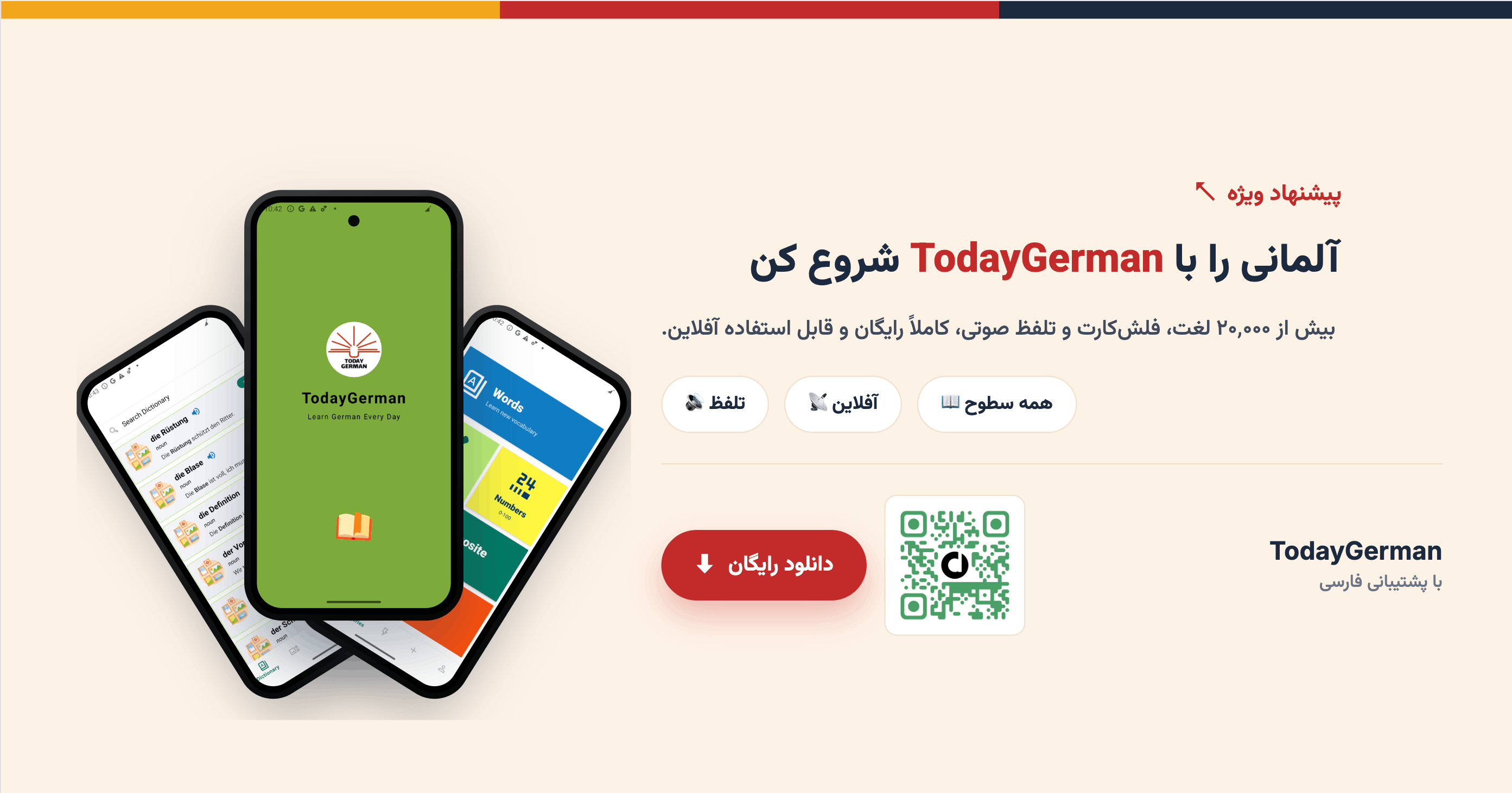
- DW Learn German — free structured courses from A1 to C1
- Nicos Weg — Deutsche Welle's popular educational series
- Anki — flashcards for vocabulary; 20 new words a day
- VHS (Volkshochschule) — affordable in-person courses once you arrive in Germany
- University Language Centers — most German universities offer free language courses for enrolled students; for example, the University of Passau's Language Center offers free German, French, and other language classes
Strategy for Persian Speakers
- Learn grammar through examples, not tables—the four cases (Kasus) are internalized through practice
- Speak out loud from day one—even to yourself
- Watch with German subtitles, not Persian
- Practice conversation once a week with a fellow speaker who knows German
Tip: Consistency is more important than intensity. one hour every day is better than seven hours on Friday.
Your next guides
Recommended apps
Useful tools for planning, reading, and learning German.